
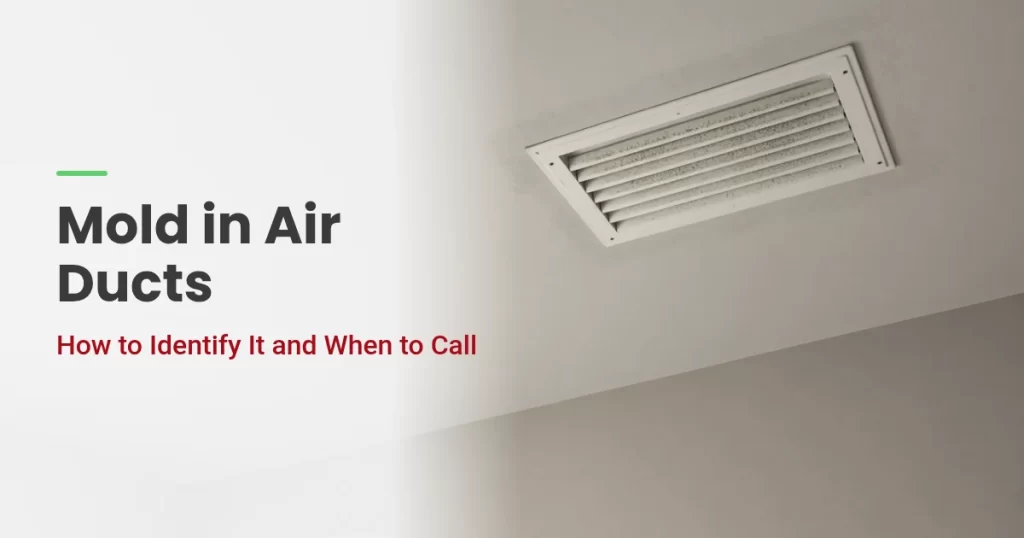
A musty, earthy smell when your HVAC system starts is often the first sign of mold in air ducts. The odor is strongest at the vents, and it can return once the blower kicks on even after you have aired out the house. Wiping the register covers is not enough. Growth inside the ducts, on the coil or in the blower compartment stays in the airstream and sends spores into every room the system serves.
Mold needs moisture, something to feed on and a dark, still space. Dust inside the ducts supplies the food. Condensation from cold air moving through a warm attic or crawlspace supplies the moisture. Once it takes hold, the blower does the rest of the work.
What does mold in air ducts smell like?
The smell is musty, earthy or stale. It is usually strongest when the system first starts and eases a little as the cycle runs. Some people compare it to a damp basement or wet wood.
If the odor is only in one room, the problem may be in that branch duct or in the wall around the register. If you notice it throughout the house, look at the main supply or return plenum, the evaporator coil or the blower compartment. Those parts sit in the airstream and collect condensation.
A sour or rotting smell that does not match that musty profile can mean a dead animal in the ductwork. That needs a different response than mold, so it is worth ruling out before you assume what you are smelling.
What does mold in air ducts look like?
You often cannot see the full problem from the register. What shows at the opening may be only a small part of what is farther in. Common visible signs include:
- Black, green or gray patches on the inside edges of supply registers or return grilles
- Fuzzy or velvety growth on metal or flex duct just inside the vent
- White or gray powdery residue on the register slats
- Dark staining at duct seams in a humid attic or crawlspace
If you see this at several registers, the issue may be widespread. If it is only at one vent, the moisture source may be local: a nearby leak, a bathroom that stays humid, or condensation on a cold surface.
What causes mold to grow in air ducts?
The cause is always moisture. The most common sources are:
- Condensation on the ducts. Cold air running through a hot attic or crawlspace can make the duct surface sweat. Damaged or missing insulation lets that moisture soak into the lining.
- High indoor humidity. A house that stays damp, or an air conditioner that short-cycles and never dries the air, keeps the duct interior wet enough for growth to start.
- HVAC problems. A clogged condensate drain holds standing water in the airstream. A dirty evaporator coil stays wet and collects dust, which is an easy place for mold to grow.
- Water getting in. A roof or plumbing leak, or flooding that reached the ducts, can start growth quickly if the material is not dried.
- Failed duct insulation. When insulation tears or pulls away at the seams, the exposed metal sweats and the moisture wicks into the dust inside.
Mold vs. dust vs. mildew in air ducts
Not every dark mark on a vent is mold. Use the differences below as a starting point, then have the system inspected if you are not sure.
| Mold | Mildew | Dust or dirt | |
|---|---|---|---|
| Appearance | Fuzzy, velvety or slimy patches; black, green, gray or white | Flat and powdery; usually gray, white or light brown | Dry, crumbly or greasy; gray, brown or black |
| Smell | Strong musty or earthy odor from the vents | Milder damp smell | Little or no odor; may smell stale if it is thick |
| Where it shows up | Duct surfaces, insulation, coil or blower, often in patches | Flat surfaces such as register covers or duct walls | Around register edges and just inside the opening |
| What it does over time | Spreads if the moisture continues | Stays on the surface and often wipes off | Accumulates; it does not grow |
| What you can do | Do not disturb it; call for an inspection | Accessible surfaces can sometimes be cleaned carefully | Vacuum the registers and change the filter |
If you cannot tell what you are looking at, a technician can inspect the system and take moisture readings instead of guessing from the register alone.
What are the health risks of mold in air ducts?
The concern is circulation. The HVAC system can move spores into every room it serves. People with allergies, asthma or a weakened immune system are more likely to notice symptoms, but throat irritation, coughing or headaches can show up with enough exposure even if you do not have an existing condition.
Common symptoms tied to this kind of exposure include nasal congestion, coughing, wheezing, irritated eyes and a flare-up of existing asthma. A pattern worth paying attention to is symptoms that worsen at home and ease when you are away. That does not prove the ducts are the cause, but it is a reason to inspect the system rather than keep running it and hoping the air clears.
This is not a medical diagnosis. If someone in the house is having breathing trouble, talk to a doctor as well as a technician.
Can you clean mold out of air ducts yourself?
No, not safely or completely. The visible part of the vent is only a fraction of the system. Scrubbing a register cover does nothing for growth on the coil, in the plenum, along the duct walls or in the insulation.
Do not spray bleach or household cleaners into the vents. Bleach does not reach mold in porous liner or insulation, and the fumes will travel through the house when the system runs. Stirring up the growth without containment also sends more spores into the living space.
What you can do before someone arrives:
- Turn the system off if the musty smell is strong, so you are not spreading more spores
- Fix any obvious moisture source you can reach, such as a leaking pipe or a clogged condensate drain
- Take photos at each register so the technician can see what you saw
- Leave the vents alone otherwise
What does professional mold remediation in the ducts involve?
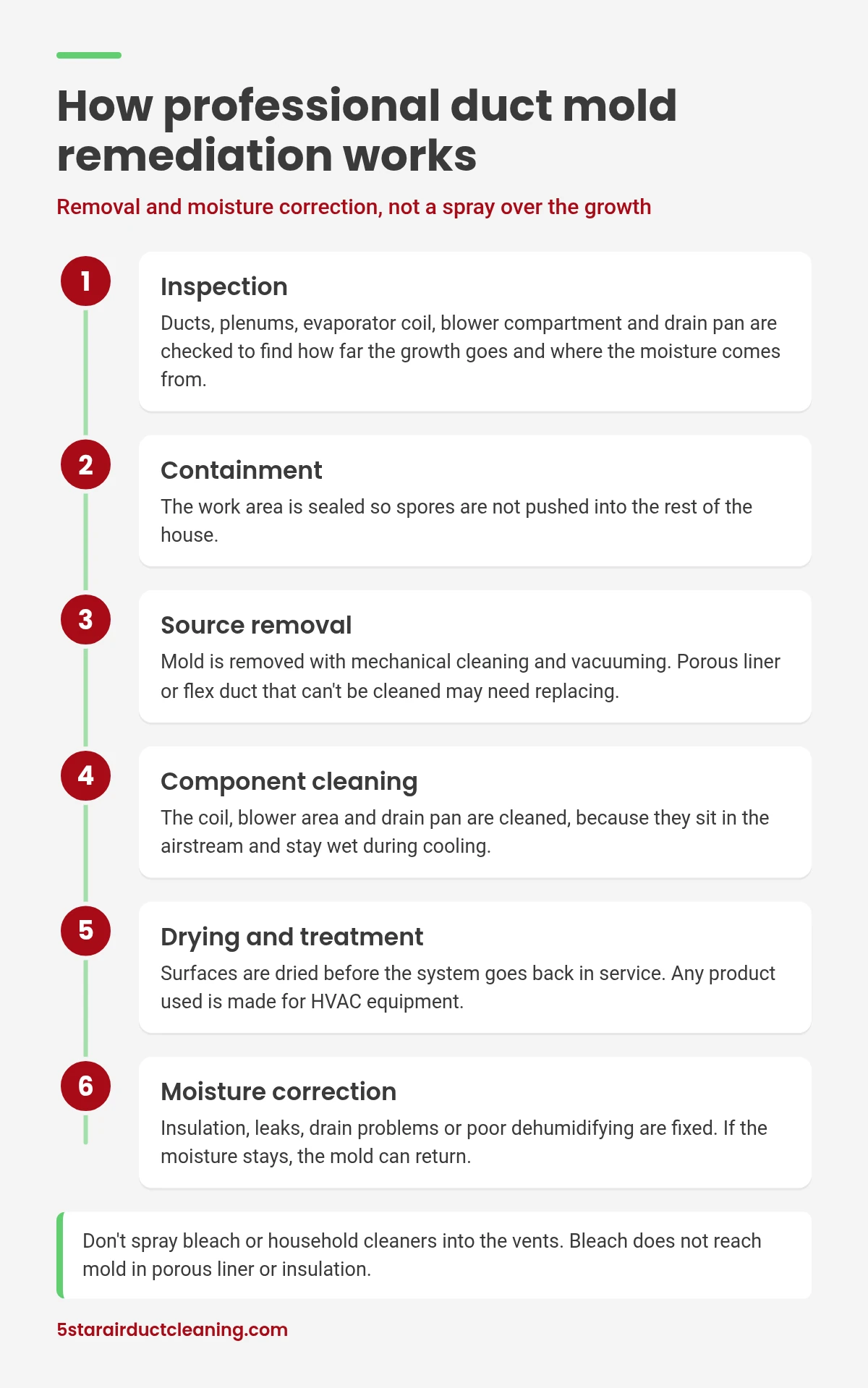
The work is removal and moisture correction, not a spray over the top of the growth.
- Inspection. The technician looks at the ducts, plenums, evaporator coil, blower compartment and drain pan to find how far the growth goes and where the moisture is coming from. A camera and moisture readings help on sections that are not open to view.
- Containment. The work area is sealed so spores are not pushed into the rest of the house while the ducts are cleaned.
- Source removal. Mold is taken off the surfaces with mechanical cleaning and vacuuming. Porous liner or flex duct that cannot be cleaned thoroughly may need to be replaced. That step is what separates a real remediation from wiping the registers.
- Component cleaning. The coil, blower area and drain pan are cleaned, because those parts sit in the airstream and stay wet during cooling.
- Drying and treatment. Surfaces are dried before the system is put back in service. Any product used in the ducts should be made for HVAC equipment, not a household cleaner.
- Moisture correction. Insulation, leaks, a drain problem or a system that is not dehumidifying properly still has to be fixed. If the moisture stays, the mold can return.
If sections of duct have to be replaced, see our duct installation and replacement page. An inspection comes first; our duct inspection service is the place to start when you are not sure what you are looking at.
How do you keep mold from returning?
Prevention is moisture control.
- Keep the house from staying damp. A working air conditioner or a dehumidifier should leave the air comfortable, not sticky.
- Change the HVAC filter on a regular schedule, and check it more often if you have pets or a lot of dust.
- Have the coil, condensate drain and blower compartment checked during routine HVAC service. A clogged drain pan alone can start a problem in one cooling season.
- Repair damaged duct insulation in attics and crawlspaces, where condensation is common.
- Dry the ducts promptly if a leak or flood reaches them.
- Run the bathroom fan during and after showers so the system is not left to handle all of that humidity.
Regular air duct cleaning is not the same job as mold remediation, but a clean, dry system is harder for growth to get started in. If indoor air quality is the main concern, our indoor air quality page covers the related work.
When should you stop and call?
You can change filters, watch humidity and keep registers clean. Call for an inspection when:
- A musty or earthy smell from the vents stays after you change the filter and air out the house
- You can see growth on or inside more than one register
- Allergy or asthma symptoms keep worsening at home and easing elsewhere
- Water has reached the ductwork
- The system has a history of a clogged drain or heavy condensation
Frequently asked questions
Can mold in air ducts make you sick?
It can trigger symptoms. Spores in the ductwork are blown into the rooms the system serves. People with allergies, asthma or a weakened immune system are more likely to notice congestion, coughing or irritated eyes, and anyone can feel throat irritation after enough exposure.
Can I spray bleach into my air vents to kill mold?
No. Bleach does not reach mold in porous duct liner or insulation, and the fumes circulate when the system runs. Disturbing the growth without containment also releases more spores into the house.
How do I know if it is mold or just dust?
Mold usually has a musty, earthy smell and looks fuzzy, velvety or slimy. Dust is dry and crumbly and does not grow or spread on its own. If you cannot tell, an inspection with moisture readings is safer than guessing.
Does homeowners insurance cover mold in air ducts?
It depends on the policy and on what caused the mold. Growth after a sudden event such as a burst pipe is more often covered than growth from long-term humidity. Read your policy and document the moisture source before you file a claim.
Will the mold come back after the ducts are cleaned?
It can, if the moisture source is still there. Cleaning without fixing insulation, a leak, a drain problem or a system that leaves the ducts damp often leads to a return. The moisture correction is as important as the cleaning.
Smell something musty from the vents? Call 5 Star Air Duct Cleaning
If the odor stays, you can see growth around the registers, or symptoms ease when you leave the house, the next step is an inspection of the ducts, coil, blower and drain pan. Call 5 Star Air Duct Cleaning at (858) 800-3094 or use the contact form.